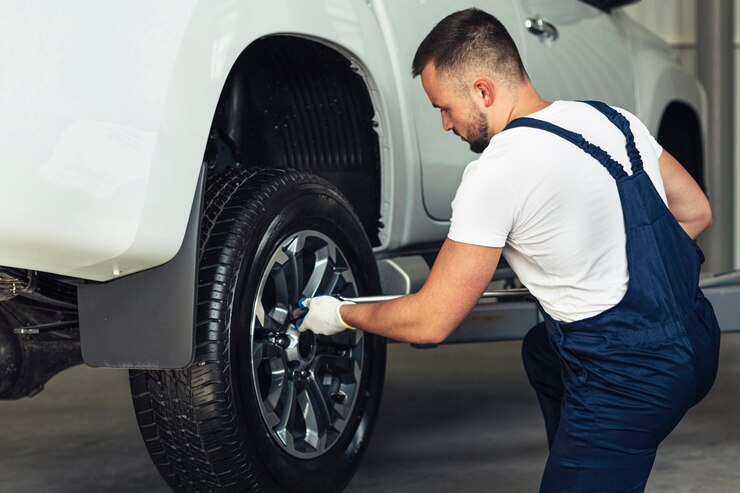
Tire rotation involves moving each tire to a different position on the vehicle to ensure even wear. Start by parking on a flat surface and engaging the parking brake. Loosen the lug nuts on each tire while the car is still on the ground. Lift the car with a jack and secure it on jack stands. Remove the tires and place them in their new positions according to the vehicle’s recommended pattern (e.g., front-to-back or diagonal). Reinstall and tighten the lug nuts. Lower the car, remove the jack stands, and ensure the lug nuts are fully tightened. Regular rotation promotes tire longevity and balanced handling.
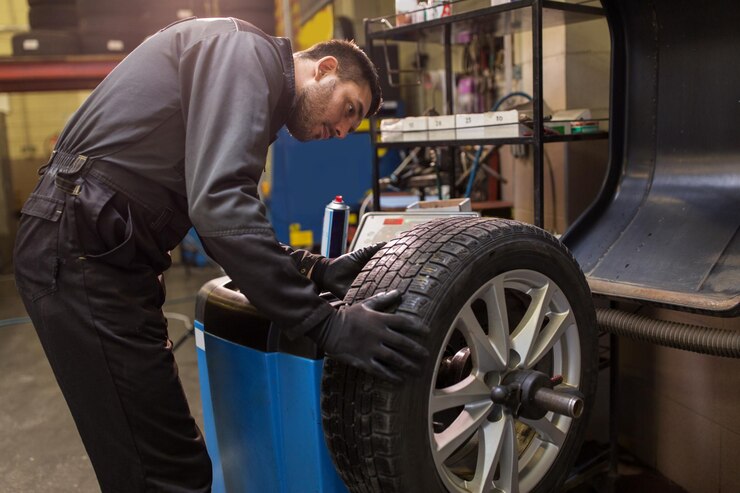
Tire balancing ensures even weight distribution around the tire and wheel assembly, preventing vibrations and uneven wear. During the process, the tire is removed and mounted on a balancing machine, which spins it to detect any imbalances. Small weights are then added to specific spots on the wheel to counterbalance any uneven weight distribution. Once balanced, the tire is reinstalled on the vehicle. Proper tire balancing improves ride comfort, extends tire life, and ensures even tread wear, enhancing overall vehicle safety and performance. Regular balancing is recommended, especially after tire rotations or if vibrations are felt while driving.