
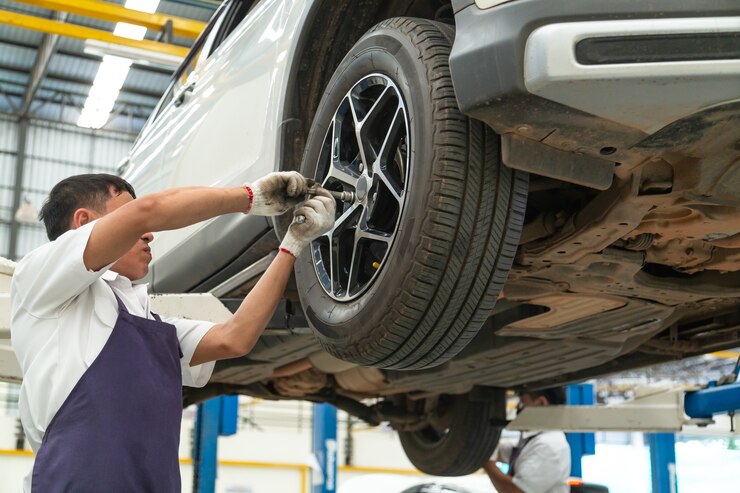
Checking the tread depth and wear of your tires on a regular basis is a smart practice. Tires inevitably wear out, and if there is damage to the sidewall or the tread depth drops too much, it may be unsafe to drive further. In Canada, 1.6 mm, or 2/32 of an inch, is the maximum permissible tread depth. Nonetheless, tire manufacturers advise you to get new tires before the minimal tread depth is permitted. A Canadian quarter, with the caribou facing down, is traditionally inserted into one of the grooves to measure the depth of your tread. You have less than 6/32nd of an inch if you can see the tip of the caribous nose, and it will soon be time to
It’s crucial to make sure your new tires fit your driving style and season when buying tires for your car. The majority of tires fall into one of two categories: tires that are suitable for year-round use or tires that require seasonal changes in the spring for the warmer months and in the fall for the winter’s harsh weather.
All-weather tires work well in both heavy rain and moderate snowfall, although they operate best in mild winter weather. To offer stability, the tread design has a variety of treads that displace slush and rainwater. Grip both above and below 7C will be provided by the rubber compounds.
All Season Tires are typically seen on new cars are called all-season tires. Designed to be used all year round in situations where winter driving conditions don’t
Summer tires are made to give you traction during the warmer months, whether it’s rainy or dry. They are not intended for driving in any kind of cold weather or below 7C.
Winter tires include softer rubber compounds, which offer better traction when it’s seven degrees Celsius or lower outside. In addition, the tread edges are made to grip in situations of snow and ice, and the deeper grooves direct water and slush away.
Finding the tire size that the manufacturer recommends for your car is the first step. Examining the plaque on your car’s inside door jamb is a simple way to verify this. This is where you can find your vehicle’s width, profile, and wheel size.